Lawrenceburg, IN · Dearborn County
Basement Water Damage Restoration in Lawrenceburg, INBasement Drying Services & Basement Mold Prevention
Basement Water Damage Restoration in Lawrenceburg includes emergency basement flood cleanup, basement sewer backup cleanup and basement wall drying.
Answered 24/7
Expert Basement Water Damage Restoration Serving Lawrenceburg
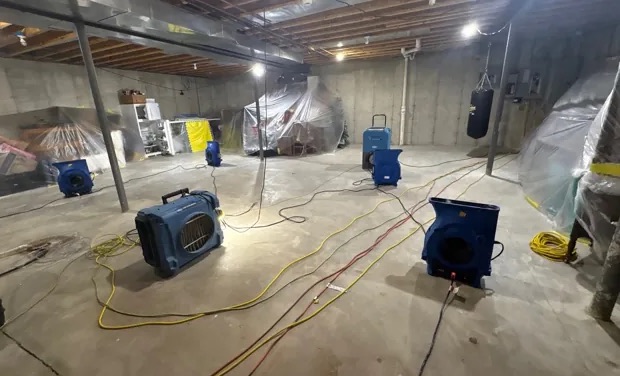
A basement dries slower than any other part of a house. The air is cool, there is little sunlight and the concrete holds moisture for a long time. In Lawrenceburg, that makes extraction and steady dehumidification important.
In Lawrenceburg, a home with a basement or below-grade room can flood after heavy rain or a blocked sewer line. Local water damage pros serve Lawrenceburg, Greendale, Aurora and Francisville, pumping out water and drying finished and unfinished spaces.
Professional Basement Water Damage Restoration Offered in Lawrenceburg
Basement Drying Services
Air movers and dehumidifiers are placed to dry walls, framing and the slab. Below-grade rooms dry slowly, so readings are taken daily.
Basement Mold Prevention
Keeping basement humidity low after drying helps prevent mold from returning, especially in finished spaces.
Basement Sewer Backup Cleanup
After a sewer backup, cleanup and disinfection come before drying, so contaminated surfaces are not left in place.
Emergency Basement Flood Cleanup
A flooded basement can damage furnaces, water heaters and stored items quickly. Fast pumping limits how much is lost.
Basement Wall Drying
Finished basement walls hide wet insulation and framing. Removing the bottom of the drywall lets air reach the cavity.
How to Know You Need Basement Water Damage Restoration in Lawrenceburg
Sump Pump Failure or Overflow
A sump pump that runs constantly, fails to start or lets the pit overflow puts the basement at risk.
Damp or Musty Odors
A damp, earthy or musty smell in the basement often means hidden moisture in walls, carpet or the slab.
Wet or Stained Basement Walls
Dark, wet patches or tide lines on basement walls show where water seeped in or wicked up.
High Humidity Levels Below-Grade
A basement that stays damp and clammy even on dry days has a moisture source that needs attention.
How Basement Water Damage Restoration Works in Lawrenceburg
Step 1: Source Control and Extraction
The pipe is shut off, the sump restarted or the backup stopped, then the water is pumped out.
Step 2: Structural Drying Setup
Lower drywall is removed where soaked, and equipment is placed to dry wall cavities and the slab.
Step 3: Contaminant Removal
Materials touched by sewage or dirty water are removed and hard surfaces are cleaned and disinfected.
Step 4: Monitoring and Completion
Daily readings track drying until every material is normal, then equipment is removed.
Typical Sources of Basement Water Damage in Lawrenceburg
Clogged Floor Drains
A floor drain blocked by debris cannot carry off water from a leak or overflow, so it spreads across the basement floor.
HVAC Condensate Line Overflow
A clogged furnace or air conditioner condensate line can overflow onto the floor of a basement or lower-level utility room.
High Water Table and Hydrostatic Pressure
A high water table pushes groundwater up through the slab and into the joints between wall and floor.
Plumbing Pipe Bursts or Leaks
Supply lines and drain pipes in basement ceilings can crack or burst onto the floor below.
Home and Business Basement Water Damage Restoration in Lawrenceburg
Residential Basement Water Damage Restoration
Finished basements used as living space need carpet, pad and lower drywall checked carefully. Soaked materials are removed so the walls and slab can dry.
Commercial Basement Water Damage Restoration
Businesses with below-grade storage need inventory moved out of the water quickly. Wet stock is separated and documented for insurance.
When to DIY and When to Call the Pros for Basement Water Damage Restoration
Do not walk into standing basement water if outlets, cords or appliances are submerged. Shut off power at the panel if you can reach it safely, then call (513) 854-7491.
What Influences Basement Water Damage Restoration Cost in Lawrenceburg
The cost of basement water damage restoration in Lawrenceburg depends on how much water there is, whether it is clean or sewage and how much finished material must be removed.
Access Complexity
Narrow stairs, low ceilings and stored contents can make the work slower.
Secondary Damage
Damage to furnaces, water heaters and belongings adds repair and replacement costs.
Water Category
Clean water costs less to handle than sewage, which needs protective gear, removal and disinfection.
Does Insurance Cover Basement Water Damage Restoration?
Photos, moisture readings and drying logs from local water damage pros help support an insurance claim for basement water damage in Lawrenceburg.
Why Choose Local Pros for Basement Water Damage Restoration in Lawrenceburg
Containment Strategies
Plastic sheeting keeps contaminated areas separate from clean parts of the house.
Water Type Handling
Clean water, gray water and sewage are each handled with the right protection and removal steps.
Industrial-Grade Equipment
Pumps, extractors and large dehumidifiers remove water much faster than household wet vacs and fans.
Emergency Basement Water Damage Restoration Available in Lawrenceburg
Water rising in your basement in Lawrenceburg? Shut off power to the basement if it is safe, move what you can and call (513) 854-7491. Help is available 24/7.
Call Now (513) 854-7491Basement Water Damage Restoration Near Lawrenceburg: Areas Served
Basement water removal and drying also cover homes and buildings in Greendale, Aurora and Francisville, close to Lawrenceburg, day or night.
- Basement Water Damage Restoration in Greendale
- Basement Water Damage Restoration in Aurora
- Basement Water Damage Restoration in Francisville
- Basement Water Damage Restoration in Burlington
- Basement Water Damage Restoration in Rising Sun
- Basement Water Damage Restoration in Harrison
- Basement Water Damage Restoration in Green Township
- Basement Water Damage Restoration in Mack
- Emergency Damage Restoration in 47025
- Storm Damage Restoration in 47025
- Water Damage Restoration in 47025
- Water Extraction Service in 47025
- Water Leak Detection in 47025
- Water Removal Service in 47025
Frequently Asked Questions About Basement Water Damage Restoration
How long does below-grade drying take after a flood?
Often several days or longer, since concrete and cool basement air dry slowly. Daily readings show progress.
Does basement mold prevention need special steps after flooding?
Fast drying is the main step. Wood and concrete that stayed wet can be treated with an antimicrobial once dry.
How is basement sewer backup cleanup different from regular flooding?
Sewage carries bacteria, so it needs protective gear, removal of porous materials and disinfection before drying.
What causes the most common below-grade leaks in homes?
Sump pump failures, foundation cracks, clogged drain tile, sewer backups and burst pipes in the basement ceiling.
Should I try below-grade waterproofing myself after flooding?
Sealing a small crack can be a DIY job, but drying must come first, and larger waterproofing work should go to a contractor.