Mason, OH · Warren County
Basement Water Damage Restoration in Mason, OHBasement Dehumidification & Basement Mold Prevention
Basement Water Damage Restoration in Mason includes emergency basement flood cleanup, basement sewer backup cleanup and basement wall drying.
Answered 24/7
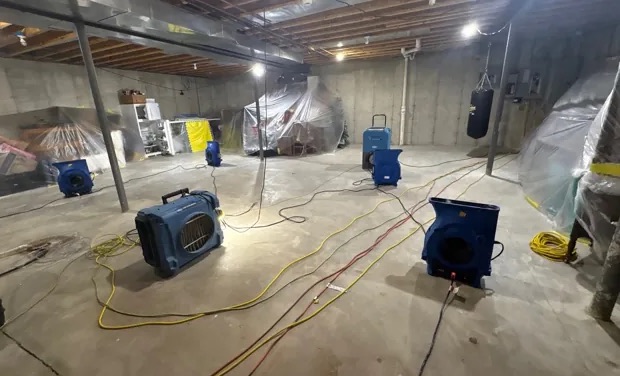
Basement Water Damage Restoration Solutions in Mason, Ohio
A basement dries slower than any other part of a house. The air is cool, there is little sunlight and the concrete holds moisture for a long time. In Mason, that makes extraction and steady dehumidification important.
One burst pipe or heavy storm in Mason can flood a basement. Local water removal pros serve Mason and nearby West Chester Township, Monroe and Loveland, with help available around the clock.
Basement Water Damage Restoration Services in Mason
Basement Dehumidification
Large dehumidifiers pull moisture from the basement air so walls, framing and the slab can release their water.
Basement Mold Prevention
Fast extraction and drying are the main ways to limit microbial growth in a basement. Surfaces that stayed wet can be treated once dry.
Basement Water Extraction
Submersible pumps remove deep standing water, then portable extractors pull water from carpet, pad and the concrete floor.
Basement Sewer Backup Cleanup
Sewage that backs up through a floor drain or toilet is extracted with protective gear, and the area is contained from the rest of the house.
Basement Floor Water Removal
Water on a concrete floor is squeegeed and extracted, and floor coverings such as carpet, vinyl or laminate are lifted to dry the slab.
Indicators for Basement Water Damage Restoration in Mason
Peeling Paint or Wallpaper
Paint that peels or blisters on basement walls often has moisture behind it.
Sump Pump Failure or Overflow
A sump pump that runs constantly, fails to start or lets the pit overflow puts the basement at risk.
Condensation on Windows or Pipes
Water beading on cold pipes or basement windows shows high humidity that keeps materials damp.
Efflorescence on Concrete Walls
White, chalky deposits on concrete walls mean water is moving through the concrete and leaving minerals behind.
How Basement Water Damage Restoration Works in Mason
Step 1: Initial Assessment and Water Removal
The source and type of water are identified, and standing water is removed right away.
Step 2: Focused Drying of Materials
Walls, framing and the slab are dried with directed airflow, with wet insulation removed.
Step 3: Air Quality Management
Air scrubbers filter dust and odors from removal work while drying continues.
Step 4: Documentation for Restoration
Photos, readings and a list of removed materials are prepared for insurance and rebuilding.
Typical Sources of Basement Water Damage in Mason
Sump Pump Mechanical Failure
A sump pump that fails, loses power or is too small lets groundwater rise into the basement.
Faulty Basement Waterproofing
Old or failed waterproofing on foundation walls lets water through during wet weather.
Foundation Cracks and Leaks
Cracks in foundation walls let groundwater and melting snow seep into the basement.
Water Heater or Appliance Leaks
Water heaters, washers and utility sinks in the basement can leak or fail without warning.
Basement Water Damage Restoration for All Properties in Mason
Residential Basement Water Damage Restoration
A sewer backup in a home basement needs contaminated carpet, pad and drywall removed and every hard surface disinfected before drying.
Commercial Basement Water Damage Restoration
In restaurants and stores with basements, sewage backups need fast containment so contamination does not reach food or customer areas.
Basement Water Damage Restoration vs. DIY: When to Call the Pros
You can move belongings off the floor and run a household dehumidifier. Drying soaked walls and slabs needs larger equipment and moisture readings to confirm the space is truly dry.
Basement Water Damage Restoration Cost in Mason, OH
Sewage cleanup, finished walls, storm-night calls and damaged appliances all add to the total for basement water damage restoration in Mason.
Affected Square Footage
Larger basements need more extraction, more drying equipment and more days of drying time.
Access Complexity
Narrow stairs, low ceilings and stored contents can make the work slower.
Material Saturation
Finished basements with carpet, drywall and insulation take more removal work than bare concrete.
Does Insurance Cover Basement Water Damage Restoration?
Photos, moisture readings and drying logs from local water removal pros help support an insurance claim for basement water damage in Mason.
Reasons to Hire Local Pros for Basement Water Damage Restoration in Mason
Advanced Moisture Detection
Moisture meters and thermal cameras find water in walls and slabs that looks dry.
Industry Drying Standards
Drying follows industry water damage standards, with readings taken at every visit.
Mold Prevention Focus
Fast drying is the main way to limit microbial growth in a below-grade space.
24/7 Emergency Basement Water Damage Restoration in Mason
Storm night, weekend or holiday, the pros handle flooded basements in Mason. Call (513) 854-7491 to get the pumps running and the water out.
Call Now (513) 854-7491Basement Water Damage Restoration Near Mason: Areas Served
Help with basement water damage restoration is also available in communities near Mason, including West Chester Township, Monroe and Loveland, for flooded basements and sewer backups.
- Basement Water Damage Restoration in West Chester Township
- Basement Water Damage Restoration in Monroe
- Basement Water Damage Restoration in Loveland
- Basement Water Damage Restoration in Lebanon
- Basement Water Damage Restoration in Sharonville
- Basement Water Damage Restoration in Montgomery
- Basement Water Damage Restoration in Blue Ash
- Basement Water Damage Restoration in Springdale
- Emergency Damage Restoration in 45040
- Storm Damage Restoration in 45040
- Water Damage Restoration in 45040
- Water Extraction Service in 45040
- Water Leak Detection in 45040
- Water Removal Service in 45040
FAQ for Basement Water Damage Restoration in Mason
What equipment is used for below-grade water damage repair?
Submersible pumps, extractors, air movers, large dehumidifiers, moisture meters and air scrubbers for dust and odor.
What are signs of hidden moisture after below-grade water extraction?
Musty smells, tide lines on walls, damp carpet edges and moisture readings that stay high in walls or the slab.
What is involved in basement water damage restoration?
Pumping out water, removing soaked materials, cleaning contaminated areas, drying walls, framing and concrete, and dehumidifying until readings are normal.
What is the purpose of basement wall drying?
To remove water from drywall, insulation, framing and concrete so the walls can be repaired without trapping moisture.
Why is dehumidification so important after basement water removal?
Basements hold moisture in the air and concrete. Without dehumidifiers, walls and framing stay damp long after the water is gone.