Loveland, OH · Hamilton County
Basement Water Damage Restoration in Loveland, OHEmergency Basement Flood Cleanup & Basement Drying Services
Basement Water Damage Restoration in Loveland runs from basement water extraction and basement floor water removal to basement dehumidification.
Answered 24/7
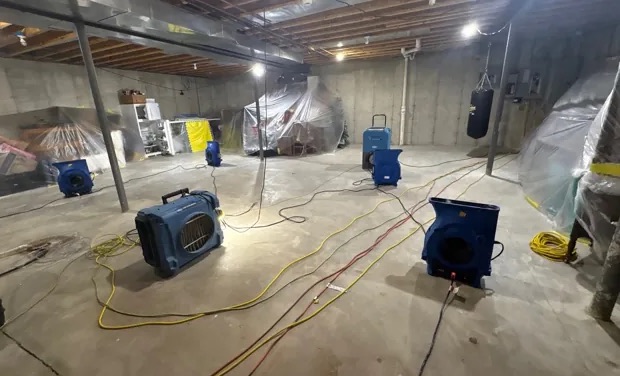
Expert Basement Water Damage Restoration Serving Loveland
Basement Water Damage Restoration in Loveland covers finished and unfinished basements. A bare concrete basement can often be pumped and dried. A finished one usually needs carpet, pad and lower drywall removed so the walls and slab can dry.
Homes in Loveland and nearby Montgomery, Goshen and Blue Ash with basements deal with seepage, plumbing leaks and sewer backups. Help with basement water damage restoration covers pumping, removal of wet materials and drying of walls and concrete.
Basement Water Damage Restoration Solutions Available in Loveland
Emergency Basement Flood Cleanup
Emergency cleanup starts with stopping the source where possible, checking for electrical hazards and pumping out the water.
Basement Drying Services
Drying a basement takes longer than drying an upper floor because the air is cool and the concrete holds moisture.
Basement Water Extraction
Submersible pumps remove deep standing water, then portable extractors pull water from carpet, pad and the concrete floor.
Basement Wall Drying
Concrete and block walls are dried with directed airflow and dehumidifiers, and checked with meters until readings drop.
Basement Floor Water Removal
Water on a concrete floor is squeegeed and extracted, and floor coverings such as carpet, vinyl or laminate are lifted to dry the slab.
Warning Signs You Need Basement Water Damage Restoration
Mold on Surfaces
Dark spots on drywall, framing or stored boxes mean the area has stayed wet for days.
Sewage Odors or Backups
Sewage smells or water coming up through a floor drain mean the sewer line is backing up.
High Humidity Levels Below-Grade
A basement that stays damp and clammy even on dry days has a moisture source that needs attention.
Standing Water in the Basement
Any standing water on the basement floor needs pumping right away, before it soaks walls and framing.
How Basement Water Damage Restoration Works in Loveland
Step 1: Water Removal
Pumps and extractors remove standing water from the basement floor, starting at the lowest point.
Step 2: Targeted Moisture Evaporation
Air movers are aimed at wet walls, framing and the slab to speed evaporation.
Step 3: Humidity Control
Large dehumidifiers pull moisture from the basement air, with readings checked every day.
Step 4: Final Verification and Restoration
Final readings confirm the basement is dry, and the space is ready for drywall and flooring repairs.
What Causes Basement Water Damage Restoration in Loveland
Failed or Clogged Drain Tile
Clogged or collapsed drain tile around the foundation lets water build up against the walls.
Sump Pump Mechanical Failure
A sump pump that fails, loses power or is too small lets groundwater rise into the basement.
Faulty Basement Waterproofing
Old or failed waterproofing on foundation walls lets water through during wet weather.
Overland Flooding From Storms
Heavy storms and snowmelt can send surface water into basements through doors and walls.
Both Residential & Commercial Basement Water Damage Restoration in Loveland
Residential Basement Water Damage Restoration
Finished basements used as living space need carpet, pad and lower drywall checked carefully. Soaked materials are removed so the walls and slab can dry.
Commercial Basement Water Damage Restoration
Businesses with below-grade storage need inventory moved out of the water quickly. Wet stock is separated and documented for insurance.
Basement Water Damage Restoration vs. DIY: When to Call the Pros
You can move belongings off the floor and run a household dehumidifier. Drying soaked walls and slabs needs larger equipment and moisture readings to confirm the space is truly dry.
Basement Water Damage Restoration Cost in Loveland, OH
The cost of basement water damage restoration in Loveland depends on how much water there is, whether it is clean or sewage and how much finished material must be removed.
Secondary Damage
Damage to furnaces, water heaters and belongings adds repair and replacement costs.
Water Category
Clean water costs less to handle than sewage, which needs protective gear, removal and disinfection.
Drying Time Required
Basements dry slowly, and longer drying means more equipment days and monitoring visits.
Does Insurance Cover Basement Water Damage Restoration?
Photograph the water level, damaged belongings and appliances before cleanup starts, and keep receipts for emergency pumping and drying to send to your insurer.
Reasons to Hire Local Pros for Basement Water Damage Restoration in Loveland
Water Extraction First
Water is removed from floors, carpet and pad before drying starts, which shortens drying time.
Containment Strategies
Plastic sheeting keeps contaminated areas separate from clean parts of the house.
Detailed Documentation
Photos, readings and drying logs are kept to support your insurance claim.
Emergency Basement Water Damage Restoration Available in Loveland
Storm night, weekend or holiday, local restoration pros handle flooded basements in Loveland. Call (513) 854-7491 to get the pumps running and the water out.
Call Now (513) 854-7491Regions Served for Basement Water Damage Restoration Near Loveland
Besides Loveland, local restoration pros handle basement pumping, drying and dehumidification in nearby Montgomery, Goshen and Blue Ash.
- Basement Water Damage Restoration in Montgomery
- Basement Water Damage Restoration in Goshen
- Basement Water Damage Restoration in Blue Ash
- Basement Water Damage Restoration in Milford
- Basement Water Damage Restoration in Mason
- Basement Water Damage Restoration in Indian Hill
- Basement Water Damage Restoration in Kenwood
- Basement Water Damage Restoration in Madeira
- Emergency Damage Restoration in 45140
- Storm Damage Restoration in 45140
- Water Damage Restoration in 45140
- Water Extraction Service in 45140
- Water Leak Detection in 45140
- Water Removal Service in 45140
Basement Water Damage Restoration Common Questions Answered
Is basement floor water removal different from carpet extraction?
Yes. Bare concrete is squeegeed and dried, while carpet and pad need extraction, and the pad is usually replaced.
What does below-grade moisture removal include beyond pumping?
Extracting carpet and pad, opening wet walls, running air movers and dehumidifiers, and checking readings until dry.
What equipment is used for below-grade water damage repair?
Submersible pumps, extractors, air movers, large dehumidifiers, moisture meters and air scrubbers for dust and odor.
What is the priority during emergency basement flood cleanup?
Safety first, especially electrical hazards, then stopping the source and pumping out the water as quickly as possible.
What causes the most common below-grade leaks in homes?
Sump pump failures, foundation cracks, clogged drain tile, sewer backups and burst pipes in the basement ceiling.