Blanchester, OH · Clinton County
Basement Water Removal in Blanchester, OHBasement Floor Water Damage & Basement Moisture Inspection
Basement Water Removal in Blanchester covers basement water pump out, basement wall drying and basement dehumidification after a flood.
Answered 24/7
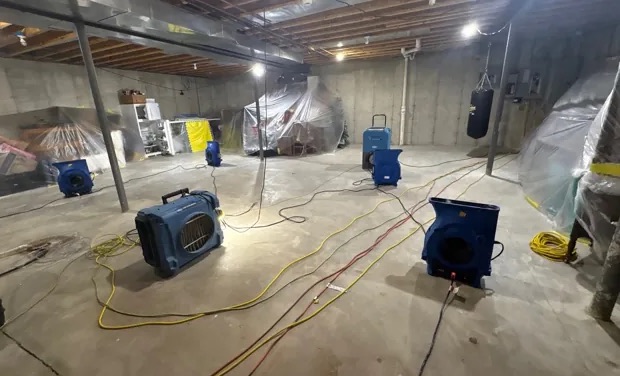
Professional Basement Water Removal in Blanchester, OH
Basement Water Removal in Blanchester protects more than the floor. Furnaces, water heaters, washers and stored belongings in the basement can all be damaged by standing water.
A single storm or burst pipe in Blanchester can flood a basement. Local basement water removal pros serve Blanchester and nearby Goshen, Wilmington and Loveland, with help available around the clock.
Specialized Basement Water Removal for Blanchester
Basement Floor Water Damage
Concrete floors are squeegeed, extracted and dried with airflow and dehumidifiers until moisture readings drop.
Basement Moisture Inspection
Readings are recorded at each visit, giving you and your insurer a clear record of the drying.
Emergency Basement Flooding
Emergency response starts with making power safe, stopping the source if possible and pumping out the water.
Sump Pump Failure Water Cleanup
A backup pump or battery system is worth discussing with a plumber after the cleanup, since sump failures often repeat in storms.
Basement Water Pump Out
Pumping starts once power to the basement is safe. Deep water goes first, then extractors handle the thin layer left on the floor.
When to Call for Basement Water Removal in Blanchester
Efflorescence on Concrete Walls
White, powdery deposits on concrete walls mean water is passing through the masonry.
Standing Water in Basement
Standing water anywhere on the basement floor needs to be pumped out before it soaks the walls.
High Humidity and Condensation
Water on pipes and windows, or a constantly clammy feel, means basement humidity is too high.
Soggy or Wet Carpeting
Carpet that feels damp or smells sour is holding water in the pad against the concrete.
How Basement Water Removal Works in Blanchester
Step 1: Safety Assessment and Pump Out
Electrical hazards are checked, then deep water is pumped outside away from the foundation.
Step 2: Content Removal and Damage Documentation
Wet belongings are moved, and photos record the water level and damaged materials.
Step 3: Targeted Water Removal and Drying
Carpet is extracted, wet drywall is cut back and air is aimed at walls and the slab.
Step 4: Sanitization and Moisture Control
Surfaces touched by dirty water are disinfected, and dehumidifiers keep humidity low.
Why Basements Flood in Blanchester
Heavy Rainfall and Storm Flooding
Heavy rain saturates the soil and pushes water through walls, cracks and the floor joint.
Sump Pump Malfunction or Power Loss
A sump pump that fails mechanically or loses power during a storm lets groundwater rise.
Clogged or Damaged Gutters
Clogged gutters and short downspouts dump roof water right next to the foundation.
Plumbing Leaks or Pipe Bursts
Supply lines, drain pipes and water heaters in the basement can leak or burst onto the floor.
Both Residential & Commercial Basement Water Removal
Residential Basement Water Removal
Finished basements used as bedrooms or family rooms need careful moisture checks behind walls and under flooring, since that is where water hides.
Commercial Basement Water Removal
Businesses with below-grade storage need wet inventory moved out and documented. Drying is planned around daily operations wherever possible.
Professional Basement Water Removal Versus Do-It-Yourself
You can move belongings up off the floor and run the dehumidifier you already own. Drying soaked walls and slab needs larger equipment and readings to confirm the job is done.
Basement Water Removal Cost in Blanchester, OH
In Blanchester, the drying phase usually costs more than the pumping, because basements need equipment running for several days.
Additional Services
Antimicrobial treatment, contents cleaning and repairs after drying add to the cost.
Water Depth and Volume
Deeper water takes more pumping time and usually means more materials got wet.
Affected Materials
Finished walls, carpet and laminate take more removal work than bare concrete.
Does Insurance Cover Basement Water Removal?
Flooding from outside water usually needs separate flood insurance. Water from a broken pipe or appliance inside is more often covered.
The Value of Professional Basement Water Removal
Advanced Drying Equipment
Pumps, extractors and large dehumidifiers remove water much faster than household tools.
Moisture Inspection
Meters and thermal cameras find water in walls, floors and slab that looks dry.
Industry Drying Standards
Water removal and drying follow industry water damage standards, with readings at every visit.
Emergency Basement Flood Response in Blanchester
Basement taking on water in Blanchester? Make power safe if you can, move what you can and call (513) 854-7491. Help is available 24/7.
Call Now (513) 854-7491Local Basement Water Removal Coverage for Goshen, Wilmington and Loveland
Besides Blanchester, local basement water removal pros handle basement pump-outs, wall drying and dehumidification in nearby Goshen, Wilmington and Loveland.
- Basement Water Removal in Goshen
- Basement Water Removal in Wilmington
- Basement Water Removal in Loveland
- Basement Water Removal in Lebanon
- Basement Water Removal in Williamsburg
- Basement Water Removal in Milford
- Basement Water Removal in Batavia
- Basement Water Removal in Mason
- Emergency Damage Restoration in 45107
- Storm Damage Restoration in 45107
- Water Damage Restoration in 45107
- Water Extraction Service in 45107
- Water Leak Detection in 45107
- Water Removal Service in 45107
Common Basement Water Removal Questions Answered
What equipment is used for basement water extraction?
Submersible pumps, extractors, wet vacs, air movers, large dehumidifiers and moisture meters to confirm drying.
Can wet drywall in a basement be saved?
Sometimes, if the water was clean and removed quickly. Soaked or contaminated drywall is cut out above the water line.
Why is basement dehumidification important after pumping?
Walls and concrete keep releasing moisture for days. Dehumidifiers remove it so the basement does not stay damp.
What is involved in basement leak cleanup?
Stopping the leak, extracting the water, drying the floor and walls and checking for hidden moisture under flooring.
How does a basement moisture inspection work?
Moisture meters and thermal cameras check walls, floors and the slab, including behind finished walls and under flooring.