Mason, OH · Warren County
Basement Water Removal in Mason, OHBasement Drying Services & Basement Floor Water Damage
Basement Water Removal in Mason runs from basement water pump out and basement drying services to basement dehumidification.
Answered 24/7
Professional Basement Water Removal in Mason, OH
Basement Water Removal in Mason starts with safety. Water near the furnace, water heater or electrical panel can be dangerous, so power is made safe before anyone steps into it.
A finished basement or lower level in Mason or West Chester Township, Monroe and Loveland can hide water under flooring and behind drywall. The pros find and remove it before it causes lasting damage.
Basement Water Removal Services in Mason
Basement Drying Services
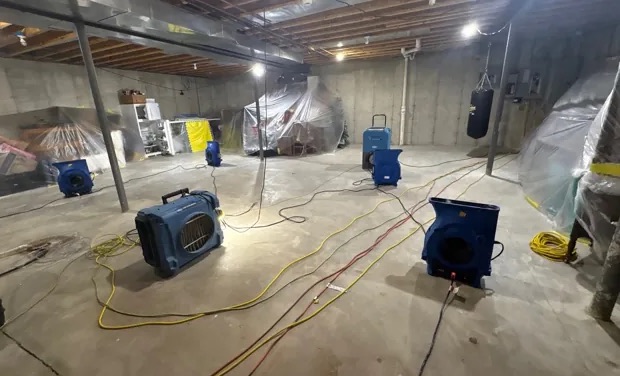
Equipment stays until the basement reads dry, not just until it looks dry. Removing it early lets dampness return.
Basement Floor Water Damage
Concrete floors are squeegeed, extracted and dried with airflow and dehumidifiers until moisture readings drop.
Sump Pump Failure Water Cleanup
Cleanup after a sump failure includes drying the area around the pit and noting whether the pump, switch or power was the cause.
Basement Moisture Inspection
An inspection shows how high water wicked up the walls and how far it spread under flooring, which sets the drying plan.
Basement Dehumidification
After drying, a household dehumidifier may still be needed to keep basement humidity in a healthy range.
Indicators You Need Professional Water Removal
Efflorescence on Concrete Walls
White, powdery deposits on concrete walls mean water is passing through the masonry.
Warped or Buckling Flooring
Flooring that buckles, lifts or feels spongy has water trapped between it and the slab.
Water Stains on Walls or Ceiling
Stains on lower walls or the ceiling below a bathroom or kitchen point to a leak.
Soggy or Wet Carpeting
Carpet that feels damp or smells sour is holding water in the pad against the concrete.
How Basement Water Removal Works in Mason
Step 1: Safety Assessment and Pump Out
Electrical hazards are checked, then deep water is pumped outside away from the foundation.
Step 2: Content Removal and Damage Documentation
Wet belongings are moved, and photos record the water level and damaged materials.
Step 3: Targeted Water Removal and Drying
Carpet is extracted, wet drywall is cut back and air is aimed at walls and the slab.
Step 4: Sanitization and Moisture Control
Surfaces touched by dirty water are disinfected, and dehumidifiers keep humidity low.
Sources of Basement Water Problems
Sewer Line Backups and Blockages
A blocked sewer line can push wastewater up through basement floor drains and toilets.
Heavy Rainfall and Storm Flooding
Heavy rain saturates the soil and pushes water through walls, cracks and the floor joint.
High Water Table and Hydrostatic Pressure
A high water table presses groundwater against the slab and walls, forcing it inside.
Foundation Cracks and Seepage
Cracks in foundation walls and the slab let groundwater seep in during wet weather.
Residential and Commercial Basement Water Removal in Mason
Residential Basement Water Removal
Older homes with a basement may see seepage with every heavy storm. Water removal handles the current damage, and the entry point is noted for a waterproofing contractor.
Commercial Basement Water Removal
Multi-unit buildings with shared basements need each storage and laundry area pumped, dried and documented for the property manager.
Why DIY Basement Water Removal Often Fails in Mason
Fans by themselves can spread damp basement air through the rest of the house. Basement drying needs dehumidifiers that pull moisture out of both the air and the concrete.
What Influences the Price of Basement Water Removal
Waterproofing and drainage work are separate costs. In Mason, they may be needed to stop the next flood.
Additional Services
Antimicrobial treatment, contents cleaning and repairs after drying add to the cost.
Drying Time Required
Basements dry slowly, and each extra day of equipment adds to the total.
Basement Square Footage
Larger basements need more extraction, more drying equipment and more days of drying.
Does Insurance Cover Basement Water Removal?
Photos, moisture readings and drying logs from local water extraction experts help support an insurance claim for basement water damage in Mason.
Why Choose Local Pros for Basement Water Removal in Mason
Detailed Damage Documentation
Photos, readings and drying logs are kept to support your insurance claim.
Methodical Water Removal Process
Water is removed in a set order: pump-out, extraction, removal of soaked materials, then drying.
Clear Communication
You get plain updates on what was found, what was removed and how drying is going.
Emergency Basement Water Removal Available 24/7
Storm night, weekend or holiday, local water extraction experts handle basement water in Mason. Call (513) 854-7491 to get pumps running and drying started.
Call Now (513) 854-7491Basement Water Removal Near Mason: Areas Served
Besides Mason, the experts handle basement pump-outs, wall drying and dehumidification in nearby West Chester Township, Monroe and Loveland.
- Basement Water Removal in West Chester Township
- Basement Water Removal in Monroe
- Basement Water Removal in Loveland
- Basement Water Removal in Lebanon
- Basement Water Removal in Sharonville
- Basement Water Removal in Montgomery
- Basement Water Removal in Blue Ash
- Basement Water Removal in Springdale
- Emergency Damage Restoration in 45040
- Storm Damage Restoration in 45040
- Water Damage Restoration in 45040
- Water Extraction Service in 45040
- Water Leak Detection in 45040
- Water Removal Service in 45040
Basement Water Removal FAQs
What is emergency basement flooding response?
Help any hour to make power safe, stop the source, pump out water and start drying before more damage sets in.
What is involved in basement leak cleanup?
Stopping the leak, extracting the water, drying the floor and walls and checking for hidden moisture under flooring.
What causes basement floor water damage?
Storm seepage, burst pipes, appliance leaks, foundation cracks and sewer backups through floor drains are the usual sources.
What equipment is used for basement water extraction?
Submersible pumps, extractors, wet vacs, air movers, large dehumidifiers and moisture meters to confirm drying.
How is basement wall drying done?
Wet drywall is cut back, insulation removed and directed airflow and dehumidifiers dry the studs and masonry.