Lawrenceburg, IN · Dearborn County
Basement Water Removal in Lawrenceburg, INSump Pump Failure Water Cleanup & Basement Drying Services
Basement Water Removal in Lawrenceburg covers basement water pump out, basement wall drying and basement dehumidification after a flood.
Answered 24/7
Reliable Basement Water Removal Near Lawrenceburg, Indiana
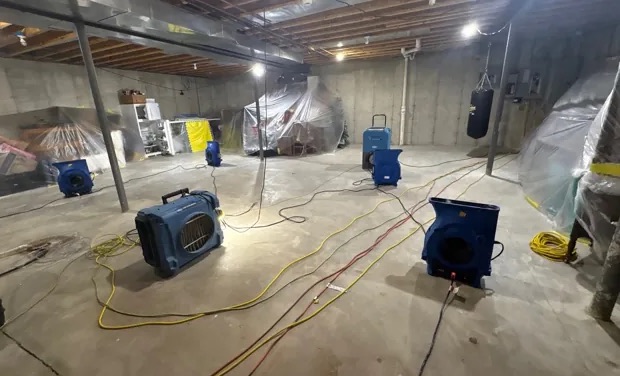
Dehumidification is the slow but necessary part of basement water removal in Lawrenceburg. Pumps remove standing water quickly, but walls and concrete keep releasing moisture for days.
A single storm or burst pipe in Lawrenceburg can flood a basement. Local basement drying experts serve Lawrenceburg and nearby Greendale, Aurora and Francisville, with help available around the clock.
Comprehensive Basement Water Removal Solutions
Sump Pump Failure Water Cleanup
A backup pump or battery system is worth discussing with a plumber after the cleanup, since sump failures often repeat in storms.
Basement Drying Services
After pumping, air movers and dehumidifiers dry the walls, framing and slab. Readings are taken daily until every surface is back to normal.
Basement Moisture Inspection
Readings are recorded at each visit, giving you and your insurer a clear record of the drying.
Basement Wall Drying
Basement walls are checked with moisture meters. Wet drywall is cut back above the water line, and insulation behind it is removed.
Basement Floor Water Damage
Flooring that buckled or swelled is removed. Tile and sealed concrete can often be cleaned and dried in place.
Indicators You Need Professional Water Removal
Wet or Damp Basement Walls
Basement walls that look dark, feel damp or show tide lines are taking on or holding water.
Water Stains on Walls or Ceiling
Stains on lower walls or the ceiling below a bathroom or kitchen point to a leak.
High Humidity and Condensation
Water on pipes and windows, or a constantly clammy feel, means basement humidity is too high.
Sump Pump Failure or Overflow
A sump pit that is full, overflowing or has a pump that will not start means water is about to spread.
How Basement Water Removal Works in Lawrenceburg
Step 1: Source Control and Water Pump Out
The leak is shut off and standing water is pumped out, starting at the lowest point.
Step 2: Water Extraction
Extractors pull water from carpet, pad and concrete, and wet vacs clear corners and stairs.
Step 3: Dehumidification and Drying
Large dehumidifiers and air movers dry walls, framing and slab over several days.
Step 4: Inspection and Clearance for Repair
Final readings confirm the basement is dry and ready for drywall and flooring repairs.
Sources of Basement Water Problems
Heavy Rainfall and Storm Flooding
Heavy rain saturates the soil and pushes water through walls, cracks and the floor joint.
Sewer Line Backups and Blockages
A blocked sewer line can push wastewater up through basement floor drains and toilets.
Improper Landscape Grading
Soil that slopes toward the house directs rainwater straight to the basement walls.
Sump Pump Malfunction or Power Loss
A sump pump that fails mechanically or loses power during a storm lets groundwater rise.
House and Business Basement Water Removal in Lawrenceburg
Residential Basement Water Removal
Families should keep children and pets away from basement water until power is safe and the type of water is known.
Commercial Basement Water Removal
In restaurants and shops, basement water near food or stock storage needs removal and cleaning before those areas are used again.
Basement Water Removal vs. DIY: When to Call the Pros
You can move belongings up off the floor and run the dehumidifier you already own. Drying soaked walls and slab needs larger equipment and readings to confirm the job is done.
Factors Affecting Basement Water Removal Cost
Sewage cleanup, finished walls, after-hours calls and damaged appliances all add to the total for basement water removal in Lawrenceburg.
Drying Time Required
Basements dry slowly, and each extra day of equipment adds to the total.
Affected Materials
Finished walls, carpet and laminate take more removal work than bare concrete.
Contamination Level
Sewage or dirty water needs protective gear, removal and disinfection, which costs more.
Does Insurance Cover Basement Water Removal?
Photos, moisture readings and drying logs from the experts help support an insurance claim for basement water damage in Lawrenceburg.
Advantages of Local Basement Water Removal Experts
Clear Communication
You get plain updates on what was found, what was removed and how drying is going.
Moisture Inspection
Meters and thermal cameras find water in walls, floors and slab that looks dry.
Post-Service Moisture Verification
Final readings are recorded before equipment leaves, so you know the basement is dry.
24/7 Basement Water Removal When You Need It
Storm night, weekend or holiday, the experts handle basement water in Lawrenceburg. Call (513) 854-7491 to get pumps running and drying started.
Call Now (513) 854-7491Basement Water Removal Serving Lawrenceburg and Surroundings
Besides Lawrenceburg, the experts handle basement pump-outs, wall drying and dehumidification in nearby Greendale, Aurora and Francisville.
- Basement Water Removal in Greendale
- Basement Water Removal in Aurora
- Basement Water Removal in Francisville
- Basement Water Removal in Burlington
- Basement Water Removal in Rising Sun
- Basement Water Removal in Harrison
- Basement Water Removal in Green Township
- Basement Water Removal in Mack
- Emergency Damage Restoration in 47025
- Storm Damage Restoration in 47025
- Water Damage Restoration in 47025
- Water Extraction Service in 47025
- Water Leak Detection in 47025
- Water Removal Service in 47025
Frequently Asked Basement Water Removal Questions
What causes basement floor water damage?
Storm seepage, burst pipes, appliance leaks, foundation cracks and sewer backups through floor drains are the usual sources.
What happens during basement moisture control?
Dehumidifiers and air movers keep humidity low while materials dry, and readings confirm when the space is normal.
Does basement flood cleanup include mold prevention?
Fast drying is the main prevention. Wood and concrete that stayed wet can be treated with an antimicrobial once dry.
What equipment is used for basement water extraction?
Submersible pumps, extractors, wet vacs, air movers, large dehumidifiers and moisture meters to confirm drying.
What should I do right after basement flooding?
Make power safe, avoid sewage, move belongings above the water, take photos and call for water removal.