Cincinnati, OH · Hamilton County
Bathroom Mold Removal in Cincinnati, OHAir Duct Mold Cleaning & Black Mold Remediation
Bathroom Mold Removal in Cincinnati cover black mold remediation, attic mold removal and post-flood mold remediation.
Answered 24/7
Mold Removal for Cincinnati Homes and Businesses
Small patches of surface mold on tile or a window frame can be cleaned at home. Larger areas, mold inside walls or mold after a flood in Cincinnati need containment and removal.
Homes and businesses in Cincinnati and nearby Covington, Newport and Fort Mitchell can get mold inspection, containment and removal from local mold removal experts. Help is available at (513) 854-7491 day or night.
Mold Removal Services for Cincinnati Properties
Air Duct Mold Cleaning
Duct mold cleaning removes buildup from ducts and registers with brushes and HEPA vacuums. Badly affected flexible duct is usually replaced rather than cleaned.
Black Mold Remediation
Black mold usually means a long-running leak. The pros find the water source, cut out moldy drywall or trim and clean the wood behind it before drying.
Crawl Space Mold Abatement
A musty smell inside the house can start in the crawl space. Affected joists are cleaned, damaged insulation is removed and moisture problems are noted for repair.
Attic Mold Removal
Attic mold often shows as dark staining on the underside of the roof deck. Affected wood is cleaned, wet insulation is removed and airflow problems are noted for repair.
Bathroom Mold Cleanup
Bathroom mold on grout and caulk can be cleaned, but mold behind tile or vanities usually means a leak. The pros find it, remove damaged material and dry the wall.
Signs That Call for Mold Removal
Stains or Discoloration
Yellow or brown stains on ceilings and walls show where water has been. Mold often grows in the same spot or just behind it.
Allergy Symptoms Indoors
Sneezing, coughing or itchy eyes that ease when you leave the house can be a sign of mold. A doctor can tell you more.
Condensation on Windows
Heavy condensation that runs down windows and wets the sills can lead to mold on frames, sills and nearby walls.
Past Water Damage That Was Not Dried
A leak or flood that was mopped up but not dried with equipment can leave moisture in walls and floors, where mold grows later.
How Bathroom Mold Removal Works in Cincinnati
Step 1: Finding the Moisture Source
Mold needs water. The pros find the leak, condensation or seepage behind it so it can be fixed.
Step 2: Setting Up Containment
The work area is sealed off and air scrubbers run so spores do not spread to clean rooms.
Step 3: Black Mold Removal
Affected drywall and trim are cut out and bagged, and the wood behind them is cleaned.
Step 4: Air Filtration and Drying
Air scrubbers clean the air while dehumidifiers dry the framing and remaining materials.
Sources of Moisture Behind Mold
Floods Not Fully Dried
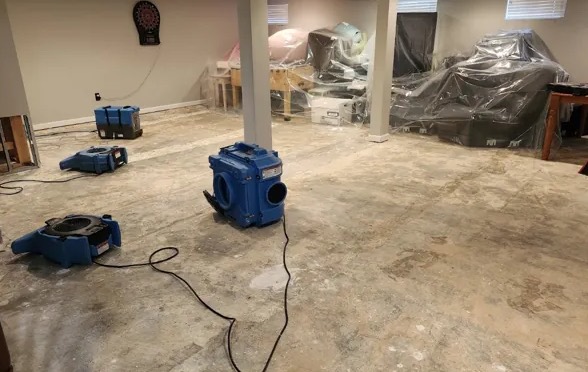
Flooding that is mopped up without dehumidifiers and air movers leaves moisture in walls and subfloors where mold grows within days.
Slow Plumbing Leaks
Drips under sinks, behind toilets and inside walls can go unnoticed for months, keeping wood and drywall wet enough for mold to grow.
AC Condensation Problems
A clogged condensate drain or a cracked drain pan leaks water near the air handler, and mold grows on nearby drywall and ductwork.
Basement Seepage
Water seeping through foundation cracks keeps basement walls and floors damp, which leads to mold on drywall, framing and stored boxes.
Residential and Commercial Bathroom Mold Removal in Cincinnati
Residential Bathroom Mold Removal
Homeowners get an inspection, containment of the moldy area, removal of damaged drywall or flooring and cleaning of the framing behind it.
Commercial Bathroom Mold Removal
Commercial buildings get the same process at a larger scale, with containment sized to the space and air filtration to protect nearby areas.
Professional Bathroom Mold Removal or DIY in Cincinnati?
Scrubbing large mold patches yourself can spread spores to other rooms. Professional containment and air filtration keep the rest of the house clean while mold is removed.
Understanding Bathroom Mold Removal Pricing in Cincinnati
The cost of bathroom mold removal in Cincinnati depends on how large the moldy area is, where it is and how much material has to be removed.
Hidden Moisture
If the leak is still active or materials are still wet, drying adds days of equipment time before the job is finished.
Rebuilding After Removal
Replacing drywall, insulation and flooring after mold removal is often priced separately from the remediation itself.
Containment Needed
Larger jobs need plastic sheeting, negative air machines and air scrubbers, which add setup time and equipment cost.
Does Insurance Cover Bathroom Mold Removal?
Coverage depends on your policy and the cause of the moisture. The pros can provide records of the work, but only your insurer can confirm what is covered.
What Local Mold Removal Experts Offer
Honest Advice on Small Jobs
If the mold is small and on a hard surface, the pros can tell you when it is safe to clean it yourself.
Drying After Removal
Mold returns if the area stays damp. The pros dry the structure and check readings before rebuilding.
Industry Remediation Standards
Removal follows industry standards for mold remediation: contain, remove damaged materials, clean, dry and check.
Round-the-Clock Bathroom Mold Removal for Cincinnati
Wet materials can start growing mold within a day or two. Call (513) 854-7491 for bathroom mold removal and drying in Cincinnati, at any time.
Call Now (513) 854-7491Bathroom Mold Removal Near Cincinnati: Areas Served
Homes and businesses in Covington, Newport and Fort Mitchell can get the same inspection, containment and removal as properties in Cincinnati.
Bathroom Mold Removal Questions and Answers
Is black mold more dangerous than other mold?
Any mold can cause allergy and breathing symptoms. The removal method is the same regardless of color: contain, remove, clean and dry.
Will mold come back after remediation?
It can if the moisture source is not fixed. Finding and stopping the leak or humidity problem is part of the job.
Can mold grow in air ducts?
Yes, especially near the air handler where condensation collects. A musty smell when the air turns on is a common sign.
Why does my basement smell musty?
A musty basement usually has damp walls, high humidity or seepage, and mold may be growing on walls, framing or stored items.
Can I remove mold myself?
Small patches on hard surfaces can be cleaned with soap and water. Larger areas, mold inside walls or mold after a flood should be handled by pros.