White Oak, OH · Hamilton County
Hydrostatic Pressure Water Removal in White Oak, OHSlab Seepage Water Removal & Basement Hydrostatic Pressure Flooding
Hydrostatic Pressure Water Removal in White Oak covers groundwater intrusion mitigation, wet subfloor removal and crawl space water extraction.
Answered 24/7
Expert Hydrostatic Pressure Water Removal Serving White Oak, OH
In White Oak, a damp crawl space from groundwater affects the air in the whole house and can draw pests and mold if it is not dried fully.
In White Oak and nearby Groesbeck, Monfort Heights and Northbrook, soaked soil can push water into basements and crawl spaces. Local groundwater extraction specialists extract the water and dry the structure.
Comprehensive Hydrostatic Pressure Water Removal Solutions
Slab Seepage Water Removal
Slab seepage water removal clears water that soil pressure forces through joints and cracks in the slab, then the flooring and baseboards are checked with moisture meters.
Basement Hydrostatic Pressure Flooding
For properties in White Oak, a census-designated place in Hamilton County, the initial response typically involves high-capacity pumping to remove standing water from lower levels.
Groundwater Intrusion Mitigation
The first step is extracting all visible water. The pros then note where water is getting in so you know what to ask a drainage contractor about.
Crawl Space Water Extraction
Water accumulation in crawl spaces due to hydrostatic pressure can compromise air quality and structural integrity.
Slab Leak Water Removal
For slab leaks in White Oak, groundwater extraction specialists remove the water and dry the slab and flooring above it.
When to Call for Hydrostatic Pressure Water Removal in White Oak
Efflorescence on Concrete Surfaces
White, chalky deposits on foundation walls or the slab show water has been pushing through the concrete.
Spongy or Soft Spots on Floors
Damp spots or lifting flooring on a slab can mean water is coming up from below.
Pooling Water in Crawl Space
Standing water in a crawl space is a clear sign water is getting in and needs to be removed.
Warped or Buckling Flooring
Flooring that warps or buckles near walls can mean water is coming up from below and the subfloor is wet.
How Hydrostatic Pressure Water Removal Works in White Oak
Step 1: Safety and Hazard Assessment
The area is made safe and electrical hazards are checked before any water removal starts.
Step 2: Foundation Crack Water Infiltration Stop
Water coming through cracks is managed with pumps while the area dries, and the cracks are noted for a foundation contractor.
Step 3: Advanced Drying System Setup
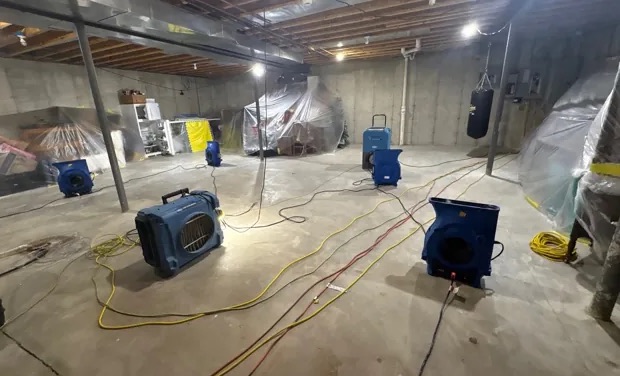
Desiccant dehumidifiers and injectidry systems are installed to dry deep within building materials. This equipment pulls moisture out of concrete, wood and insulation.
Step 4: Post-Restoration Integrity Check
A final check confirms the lower level is dry, and the readings are shared with you.
What Causes Hydrostatic Pressure Water Damage
High Water Table Levels
A high water table keeps steady pressure on the foundation and pushes water through cracks and joints.
Plumbing Leaks Under the Slab
A broken water line under the slab keeps feeding water up through the floor.
Poor Exterior Drainage Systems
Clogged gutters, downspouts and poor grading send water toward the foundation, where it builds pressure in the soil.
Failed or Missing Waterproofing
Worn exterior coatings or membranes let groundwater reach the foundation wall directly.
Hydrostatic Pressure Water Removal for All Property Types
Residential Hydrostatic Pressure Water Removal
In homes, groundwater can ruin a finished basement, belongings stored there and the crawl space under the house. Removing it early limits mold and keeps more of the space usable.
Commercial Hydrostatic Pressure Water Removal
In stores and offices, water in a lower level is a safety issue. The pros remove it and dry the space so it can be used again.
Hydrostatic Pressure Water Removal vs. DIY: When to Call the Pros
Clearing gutters and extending downspouts away from the foundation are good steps to reduce water at the walls. If water is already coming in, call (513) 854-7491 for extraction and drying.
Budgeting for Hydrostatic Pressure Water Removal in White Oak
Groundwater cleanup cost around Groesbeck, Monfort Heights and Northbrook depends on how strong the pressure is, which materials are affected and how much waterproofing repair is needed.
Affected Area Size
Larger flooded areas or large wet subfloors need more equipment and more days of drying.
Water Source Type
A slow slab seep and a sudden flood through a wall crack need different approaches and equipment.
Intrusion Severity
How deep the water is and how much keeps coming in decide how long extraction takes.
Does Insurance Cover Hydrostatic Pressure Water Removal?
Coverage for structural drying depends on your policy's limits and exclusions. The specialists provide moisture maps and drying logs, so check the details with your agent.
Benefits of Local Pros for Hydrostatic Pressure Issues
Controlled Demolition Protocols
Only subfloor and materials that cannot be dried are removed, which keeps the repair smaller.
Sump Pump System Evaluation
After a sump pump failure, the pros help you understand why it failed so a plumber can fix it.
Focused Mitigation Planning
You get notes on where water came in, so you can plan drainage work with a contractor.
Around-the-Clock Help for Hydrostatic Flooding in White Oak
Water forced in through a foundation crack can spread across a floor quickly. Call (513) 854-7491 any time for help with water removal and drying in White Oak.
Call Now (513) 854-7491Areas Served for Hydrostatic Pressure Water Removal Near White Oak
Crawl space pumping and slab leak water removal are available in White Oak and the wider Hamilton County region, including Groesbeck, Monfort Heights and Northbrook.
- Hydrostatic Pressure Water Removal in Groesbeck
- Hydrostatic Pressure Water Removal in Monfort Heights
- Hydrostatic Pressure Water Removal in Northbrook
- Hydrostatic Pressure Water Removal in Northgate
- Hydrostatic Pressure Water Removal in Mount Healthy
- Hydrostatic Pressure Water Removal in Dent
- Hydrostatic Pressure Water Removal in Colerain Township
- Hydrostatic Pressure Water Removal in Bridgetown
- Emergency Damage Restoration in 45239
- Storm Damage Restoration in 45239
- Water Damage Restoration in 45239
- Water Extraction Service in 45239
- Water Leak Detection in 45239
- Water Removal Service in 45239
- Emergency Damage Restoration in 45247
- Storm Damage Restoration in 45247
Hydrostatic Pressure Water Removal FAQs
Why does sump pump failure cause flooding?
A sump pump collects groundwater and pumps it out. When it fails, that water has nowhere to go and builds up in the lower level.
What equipment is used for groundwater extraction?
Groundwater extraction uses submersible pumps for deep water, wet-dry vacuums for shallow flooding, and specialized extractors for under-slab water removal.
What are signs of soil pressure water intrusion?
Water seeping where the floor meets the wall, damp foundation walls and ongoing moisture in a crawl space.
What steps are in flooded foundation cleanup?
Extraction, removal of mud and debris, cleaning of surfaces and full drying of the basement structure.
How long does drying take after groundwater comes in?
Most jobs take several days of drying. Waterproofing repairs, if needed, are a separate job for a waterproofing contractor.