Dry Ridge, KY · Grant County
Basement Water Damage Restoration in Dry Ridge, KYBasement Dehumidification & Basement Floor Water Removal
Basement Water Damage Restoration in Dry Ridge runs from basement water extraction and basement floor water removal to basement dehumidification.
Answered 24/7
Expert Basement Water Damage Restoration Serving Dry Ridge
A basement dries slower than any other part of a house. The air is cool, there is little sunlight and the concrete holds moisture for a long time. In Dry Ridge, that makes extraction and steady dehumidification important.
Homes in Dry Ridge and nearby Williamstown, Walton and Falmouth with basements deal with seepage, plumbing leaks and sewer backups. Help with basement water damage restoration covers pumping, removal of wet materials and drying of walls and concrete.
The Basement Water Damage Restoration Process in Dry Ridge
Basement Dehumidification
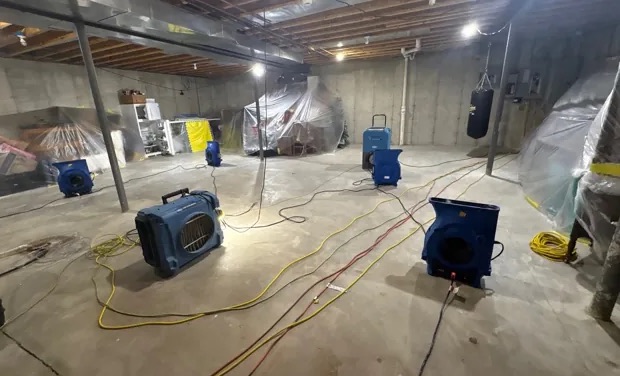
Large dehumidifiers pull moisture from the basement air so walls, framing and the slab can release their water.
Basement Floor Water Removal
A slab can look dry on top while still holding water. Moisture readings show when it is ready for new flooring.
Basement Water Extraction
Extraction starts at the lowest point, often near the floor drain or sump, and works outward until no pooled water remains.
Basement Wall Drying
Finished basement walls hide wet insulation and framing. Removing the bottom of the drywall lets air reach the cavity.
Basement Mold Prevention
Keeping basement humidity low after drying helps prevent mold from returning, especially in finished spaces.
Signs of Basement Water Damage in Dry Ridge
Rusted Appliances or Pipes
Rust on the water heater, furnace base or pipes points to repeated moisture or past flooding.
Condensation on Windows or Pipes
Water beading on cold pipes or basement windows shows high humidity that keeps materials damp.
Standing Water in the Basement
Any standing water on the basement floor needs pumping right away, before it soaks walls and framing.
Sump Pump Failure or Overflow
A sump pump that runs constantly, fails to start or lets the pit overflow puts the basement at risk.
How Basement Water Damage Restoration Works in Dry Ridge
Step 1: Source Control and Extraction
The pipe is shut off, the sump restarted or the backup stopped, then the water is pumped out.
Step 2: Structural Drying Setup
Lower drywall is removed where soaked, and equipment is placed to dry wall cavities and the slab.
Step 3: Contaminant Removal
Materials touched by sewage or dirty water are removed and hard surfaces are cleaned and disinfected.
Step 4: Monitoring and Completion
Daily readings track drying until every material is normal, then equipment is removed.
Typical Sources of Basement Water Damage in Dry Ridge
HVAC Condensate Line Overflow
A clogged furnace or air conditioner condensate line can overflow onto the floor of a basement or lower-level utility room.
Failed or Clogged Drain Tile
Clogged or collapsed drain tile around the foundation lets water build up against the walls.
Plumbing Pipe Bursts or Leaks
Supply lines and drain pipes in basement ceilings can crack or burst onto the floor below.
Water Heater or Appliance Leaks
Water heaters, washers and utility sinks in the basement can leak or fail without warning.
Residential and Commercial Basement Water Damage Restoration in Dry Ridge
Residential Basement Water Damage Restoration
In homes, a flooded basement often means damaged carpet, drywall, a furnace or water heater and stored belongings. Water is pumped out, contents are moved and the space is dried.
Commercial Basement Water Damage Restoration
In commercial buildings, basements hold mechanical rooms, storage and sometimes offices. Water is removed and equipment areas are dried so systems can be checked and restarted.
When to DIY and When to Call the Pros for Basement Water Damage Restoration
Keeping gutters and downspouts clear and checking water heater and washer hoses are good DIY steps before storm season. Once water is on the floor, call (513) 854-7491.
What Influences Basement Water Damage Restoration Cost in Dry Ridge
Before pricing basement water damage restoration in Dry Ridge, the pros check the water depth, the type of water and what the basement is finished with.
Emergency Service
Night, weekend and storm calls can cost more than a scheduled visit.
Dehumidification Needs
Large dehumidifiers may need to run longer in below-grade spaces than in upper floors.
Drying Time Required
Basements dry slowly, and longer drying means more equipment days and monitoring visits.
Does Insurance Cover Basement Water Damage Restoration?
Many homeowner policies cover sudden basement water from a burst pipe, but not seepage or groundwater. Sewer backup coverage is often a separate add-on, so check your policy.
Benefits of Local Pros for Basement Water Damage Restoration in Dry Ridge
Water Type Handling
Clean water, gray water and sewage are each handled with the right protection and removal steps.
Water Extraction First
Water is removed from floors, carpet and pad before drying starts, which shortens drying time.
24/7 Emergency Response
Help is available day or night when water is rising in the basement.
24/7 Emergency Basement Water Damage Restoration for Dry Ridge
Water rising in your basement in Dry Ridge? Shut off power to the basement if it is safe, move what you can and call (513) 854-7491. Help is available 24/7.
Call Now (513) 854-7491Basement Water Damage Restoration Near Dry Ridge: Areas Served
Help with basement water damage restoration reaches Williamstown, Walton and Falmouth, plus other communities around Dry Ridge, for finished and unfinished basements alike.
- Basement Water Damage Restoration in Williamstown
- Basement Water Damage Restoration in Walton
- Basement Water Damage Restoration in Falmouth
- Basement Water Damage Restoration in Patriot
- Basement Water Damage Restoration in Independence
- Basement Water Damage Restoration in Union
- Basement Water Damage Restoration in Florence
- Basement Water Damage Restoration in Alexandria
- Emergency Damage Restoration in 41035
- Storm Damage Restoration in 41035
- Water Damage Restoration in 41035
- Water Extraction Service in 41035
- Water Leak Detection in 41035
- Water Removal Service in 41035
Frequently Asked Questions About Basement Water Damage Restoration
Why is dehumidification so important after basement water removal?
Basements hold moisture in the air and concrete. Without dehumidifiers, walls and framing stay damp long after the water is gone.
What does below-grade moisture removal include beyond pumping?
Extracting carpet and pad, opening wet walls, running air movers and dehumidifiers, and checking readings until dry.
What health risks come with delayed basement flood cleanup?
Standing water and wet materials can support bacteria and microbial growth, and sewage carries contaminants that need disinfection.
Why is quick action important for below-grade flood restoration?
Basements dry slowly, so every hour of standing water adds days of drying and more material to replace.
Can wet basement drywall be saved after water damage?
Sometimes, if the water was clean and removed quickly. Soaked or sewage-contaminated drywall is cut out above the water line.