Williamstown, KY · Grant County
Basement Water Damage Restoration in Williamstown, KYBasement Water Extraction & Basement Floor Water Removal
Get basement water damage restoration in Williamstown for basement floor water removal, basement mold prevention and basement drying services.
Answered 24/7
Basement Water Damage Restoration Solutions in Williamstown, Kentucky
Water in a basement does not stay on the floor. It wicks up drywall, soaks insulation and seeps into wood framing. In Williamstown, a few inches of water can damage walls up to two feet high.
One burst pipe or heavy storm in Williamstown can flood a basement. Local restoration pros serve Williamstown and nearby Dry Ridge, Falmouth and Walton, with help available around the clock.
The Basement Water Damage Restoration Process in Williamstown
Basement Water Extraction
Extraction starts at the lowest point, often near the floor drain or sump, and works outward until no pooled water remains.
Basement Floor Water Removal
Wet carpet pad is removed from basement floors, since it holds water against the concrete and dries poorly.
Basement Dehumidification
A basement with no moisture problem before the flood may still need a dehumidifier afterward while the concrete dries.
Basement Sewer Backup Cleanup
Sewage that backs up through a floor drain or toilet is extracted with protective gear, and the area is contained from the rest of the house.
Basement Drying Services
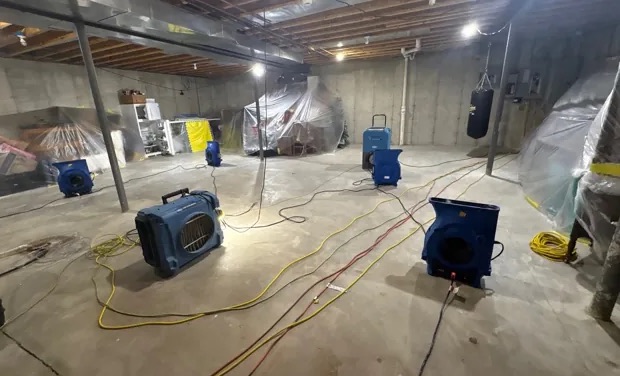
Air movers and dehumidifiers are placed to dry walls, framing and the slab. Below-grade rooms dry slowly, so readings are taken daily.
When to Consider Basement Water Damage Restoration for Your Williamstown Home
Rusted Appliances or Pipes
Rust on the water heater, furnace base or pipes points to repeated moisture or past flooding.
Condensation on Windows or Pipes
Water beading on cold pipes or basement windows shows high humidity that keeps materials damp.
High Humidity Levels Below-Grade
A basement that stays damp and clammy even on dry days has a moisture source that needs attention.
Damp or Musty Odors
A damp, earthy or musty smell in the basement often means hidden moisture in walls, carpet or the slab.
How Basement Water Damage Restoration Works in Williamstown
Step 1: Water Removal
Pumps and extractors remove standing water from the basement floor, starting at the lowest point.
Step 2: Targeted Moisture Evaporation
Air movers are aimed at wet walls, framing and the slab to speed evaporation.
Step 3: Humidity Control
Large dehumidifiers pull moisture from the basement air, with readings checked every day.
Step 4: Final Verification and Restoration
Final readings confirm the basement is dry, and the space is ready for drywall and flooring repairs.
Typical Sources of Basement Water Damage in Williamstown
Clogged Floor Drains
A floor drain blocked by debris cannot carry off water from a leak or overflow, so it spreads across the basement floor.
Sump Pump Mechanical Failure
A sump pump that fails, loses power or is too small lets groundwater rise into the basement.
Plumbing Pipe Bursts or Leaks
Supply lines and drain pipes in basement ceilings can crack or burst onto the floor below.
Overland Flooding From Storms
Heavy storms and snowmelt can send surface water into basements through doors and walls.
Residential and Commercial Basement Water Damage Restoration in Williamstown
Residential Basement Water Damage Restoration
A sewer backup in a home basement needs contaminated carpet, pad and drywall removed and every hard surface disinfected before drying.
Commercial Basement Water Damage Restoration
In restaurants and stores with basements, sewage backups need fast containment so contamination does not reach food or customer areas.
Basement Water Damage Restoration vs. DIY: When to Call the Pros
Fans alone can push damp air into the rest of the house. Basement drying needs dehumidifiers to pull the moisture out of the air and the concrete.
Factors Affecting Basement Water Damage Restoration Cost in Williamstown
Before pricing basement water damage restoration in Williamstown, the pros check the water depth, the type of water and what the basement is finished with.
Material Saturation
Finished basements with carpet, drywall and insulation take more removal work than bare concrete.
Access Complexity
Narrow stairs, low ceilings and stored contents can make the work slower.
Water Category
Clean water costs less to handle than sewage, which needs protective gear, removal and disinfection.
Does Insurance Cover Basement Water Damage Restoration?
Photos, moisture readings and drying logs from local restoration pros help support an insurance claim for basement water damage in Williamstown.
Why Choose Local Pros for Basement Water Damage Restoration in Williamstown
Structural Integrity Assessment
Walls, stairs and framing are checked for damage before work begins in the basement.
Industrial-Grade Equipment
Pumps, extractors and large dehumidifiers remove water much faster than household wet vacs and fans.
Water Type Handling
Clean water, gray water and sewage are each handled with the right protection and removal steps.
Williamstown Emergency Basement Water Damage Restoration Response
Every hour of standing water in a basement means more drywall and flooring to replace. Call (513) 854-7491 for basement water damage restoration in Williamstown.
Call Now (513) 854-7491Basement Water Damage Restoration Serving Williamstown, Dry Ridge, Falmouth and Walton
Help with basement water damage restoration reaches Dry Ridge, Falmouth and Walton, plus other communities around Williamstown, for finished and unfinished basements alike.
- Basement Water Damage Restoration in Dry Ridge
- Basement Water Damage Restoration in Falmouth
- Basement Water Damage Restoration in Walton
- Basement Water Damage Restoration in Patriot
- Basement Water Damage Restoration in Independence
- Basement Water Damage Restoration in Union
- Basement Water Damage Restoration in Alexandria
- Basement Water Damage Restoration in Florence
- Emergency Damage Restoration in 41097
- Storm Damage Restoration in 41097
- Water Damage Restoration in 41097
- Water Extraction Service in 41097
- Water Leak Detection in 41097
- Water Removal Service in 41097
Basement Water Damage Restoration Common Questions Answered
Can wet basement drywall be saved after water damage?
Sometimes, if the water was clean and removed quickly. Soaked or sewage-contaminated drywall is cut out above the water line.
Why is dehumidification so important after basement water removal?
Basements hold moisture in the air and concrete. Without dehumidifiers, walls and framing stay damp long after the water is gone.
How is basement restoration documented for insurance?
With photos of the water level and damage, moisture readings, a list of removed materials and daily drying logs.
Does basement mold prevention need special steps after flooding?
Fast drying is the main step. Wood and concrete that stayed wet can be treated with an antimicrobial once dry.
What is involved in basement water damage restoration?
Pumping out water, removing soaked materials, cleaning contaminated areas, drying walls, framing and concrete, and dehumidifying until readings are normal.