Cincinnati, OH · Hamilton County
Mold Remediation in Cincinnati, OHCrawl Space Mold Abatement & Post-Flood Mold Remediation
After a leak or flood, mold remediation in Cincinnati cover post-flood mold remediation, black mold remediation and mold odor elimination.
Answered 24/7
Mold Remediation and Mold Inspection in Cincinnati
Mold needs moisture to grow, so every mold problem in Cincinnati starts with water: a slow leak, a past flood or damp air that never dries out. Removing the mold without fixing that moisture means it comes back.
Local mold remediation specialists in Cincinnati and nearby Covington, Newport and Fort Mitchell handle mold in bathrooms, attics, crawl spaces and wall cavities, starting with the moisture source.
Mold Cleanup Options in Cincinnati
Crawl Space Mold Abatement
Crawl space mold is removed by cleaning the framing and removing wet or moldy insulation and vapor barrier. Keeping the space dry stops it from coming back.
Post-Flood Mold Remediation
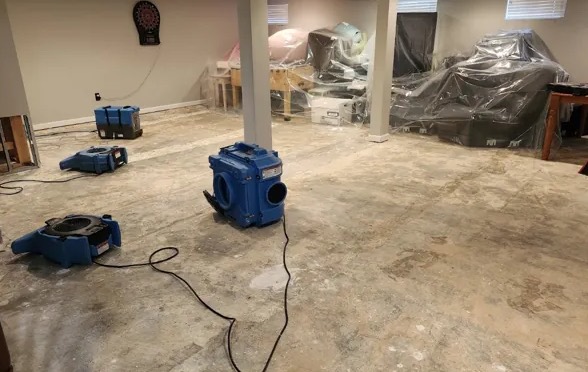
Fast drying helps prevent mold after a flood. Where mold has already started, the pros remove it before the walls are closed up again.
Basement Mold Cleanup
Mold on basement walls, joists and stored boxes usually means a moisture problem that has gone on for months. Affected materials are removed and the area is dried and cleaned.
Attic Mold Removal
Attic mold often shows as dark staining on the underside of the roof deck. Affected wood is cleaned, wet insulation is removed and airflow problems are noted for repair.
Black Mold Remediation
Dark mold on drywall or wood is handled the same way as any large mold patch: the area is sealed off, damaged material is removed and the framing behind it is cleaned.
How to Spot a Mold Problem in Cincinnati
Visible Mold on Walls or Ceilings
Black, green or gray spots on drywall, ceilings or trim are visible mold. Larger patches usually mean more is hidden behind the surface.
Condensation on Windows
Heavy condensation that runs down windows and wets the sills can lead to mold on frames, sills and nearby walls.
Damp Basement or Crawl Space
A lower level that always feels damp or smells musty is a common place for mold on walls, joists and stored items.
Past Water Damage That Was Not Dried
A leak or flood that was mopped up but not dried with equipment can leave moisture in walls and floors, where mold grows later.
How Mold Remediation Works in Cincinnati
Step 1: Attic and Crawl Space Inspection
The pros check sheathing, joists and insulation for mold and look for roof leaks, vents or plumbing problems.
Step 2: Removing Moldy Insulation
Wet or moldy insulation and vapor barrier are bagged and removed so the framing can be reached.
Step 3: Cleaning the Framing
Mold on rafters, joists and sheathing is cleaned off with brushes and HEPA vacuums.
Step 4: Fixing Moisture Conditions
The pros explain what caused the moisture, such as a roof leak or poor airflow, and what needs repair.
What Leads to Mold Damage in Cincinnati
Basement Seepage
Water seeping through foundation cracks keeps basement walls and floors damp, which leads to mold on drywall, framing and stored boxes.
Floods Not Fully Dried
Flooding that is mopped up without dehumidifiers and air movers leaves moisture in walls and subfloors where mold grows within days.
High Indoor Humidity
When indoor humidity stays high, moisture collects on cool surfaces like windows, closet walls and corners, and mold follows.
Overflowing Gutters
Gutters that overflow dump water next to the foundation, where it can seep into crawl spaces and lower walls.
Mold Removal for Homes and Businesses in Cincinnati
Residential Mold Remediation
In older homes, mold is often found in crawl spaces, attics and behind bathroom tile. The pros remove it and point out the moisture problem.
Commercial Mold Remediation
Warehouses and retail spaces with roof leaks often have mold on ceiling tiles and drywall. Affected materials are removed and replaced after drying.
Mold Remediation vs. DIY: When to Call Local Specialists
Small areas of surface mold, about the size of a doormat or less, on tile or a window frame can be cleaned with soap and water. Call local mold remediation specialists for larger areas, mold inside walls or mold after a flood.
Mold Remediation Cost in Cincinnati, OH
Most of the cost comes from containment, removal of moldy drywall or insulation, cleaning and drying. Rebuilding is usually priced separately.
Testing and Inspection
Mold testing is optional in many cases, but when it is needed it adds lab fees to the total.
Location of the Mold
Mold in attics, crawl spaces and inside walls is harder to reach and usually needs more labor than mold on an open wall.
Hidden Moisture
If the leak is still active or materials are still wet, drying adds days of equipment time before the job is finished.
Does Insurance Cover Mold Remediation?
Some policies have a separate mold limit. Ask your insurer what applies before work starts and keep photos of the damage.
Benefits of Local Mold Removal in Cincinnati
Drying After Removal
Mold returns if the area stays damp. The pros dry the structure and check readings before rebuilding.
Records for Your Insurer
Photos, readings and a written scope document the mold, the moisture source and the work done.
Clear Scope Before Work Starts
An inspection sets out what will be removed, cleaned and dried before any work begins, so there are no surprises.
Mold Help After a Leak or Flood in Cincinnati
Visible mold after a flood in Cincinnati? Keep children and pets away from the area and call (513) 854-7491 for help, 24 hours a day.
Call Now (513) 854-7491Mold Remediation Near Cincinnati: Areas Served
Besides Cincinnati, the specialists handle mold inspection and removal in nearby Covington, Newport and Fort Mitchell.
Mold Remediation Questions and Answers
How soon can mold grow after water damage?
Mold can start within 24 to 48 hours if materials stay wet, which is why drying after a leak or flood matters.
Does homeowners insurance cover mold removal?
Sometimes, when mold comes from a sudden covered water event. Mold from long-term leaks or humidity is often excluded. Check your policy.
What should I do while I wait for an inspection?
Avoid disturbing the mold, keep the area closed off, stop any active leak if you can and take photos for your records.
Why does my basement smell musty?
A musty basement usually has damp walls, high humidity or seepage, and mold may be growing on walls, framing or stored items.
Why does bathroom mold keep coming back?
Usually because of poor ventilation or a hidden leak behind tile. Cleaning the surface does not fix either problem.